The Question Your Customers Hate Asking, and Why Your Website Should Answer It
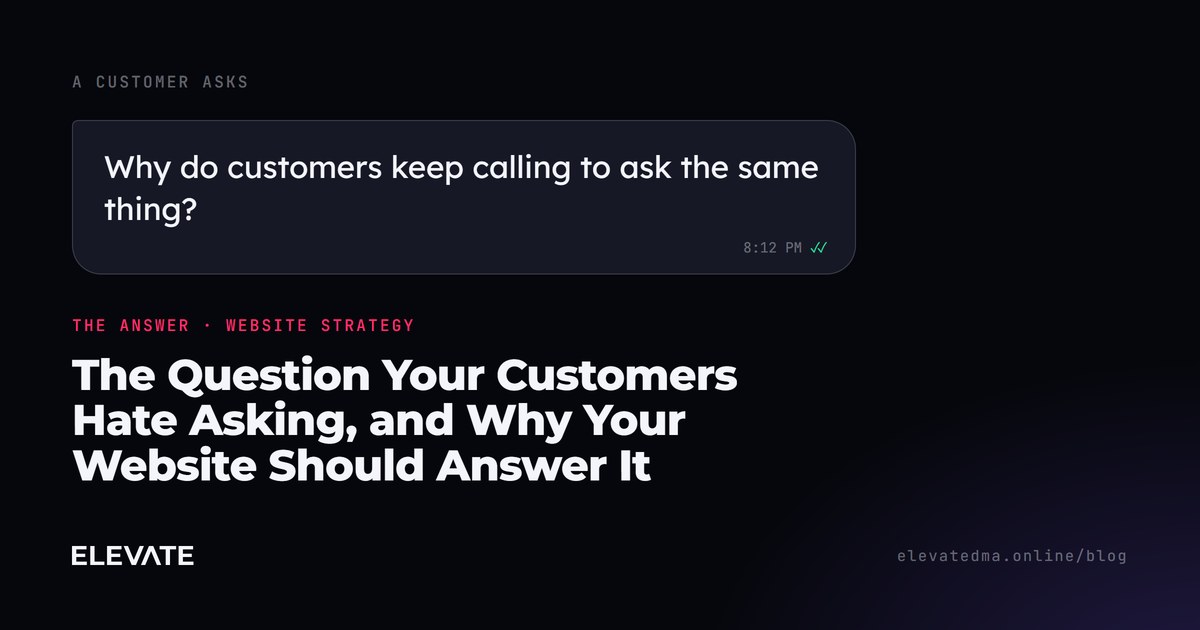
Every service business has one question it hears more than any other. A skin clinic hears "Can you fix this, and how much will it cost me?" A solar installer hears "How many panels do I actually need?" A study-abroad agent hears "Do I even qualify?"
Your staff answer it on the phone, on WhatsApp and at the front desk, ten times a day. It feels like a sign that business is healthy. It is not. For every customer who asks that question, there are others who wanted to and never did.
Why customers don't ask
The questions customers ask most are usually the ones they least want to ask. There are three reasons.
They are embarrassed
Some questions feel personal. "Is my skin bad enough to need treatment?" "Are my grades good enough?" "Can I even afford this?" Asking a stranger means admitting something. Many people would rather keep scrolling than risk feeling judged.
They expect a sales pitch
Customers know that asking "how much?" often starts a conversation they cannot easily leave. They expect to be told they qualify, that they need the premium package, and that the offer ends today. So they don't call. They keep looking for a business that will just tell them.
Asking is work
To ask, they have to find your number, wait for a reply, explain their situation, and then wait again. When the answer depends on details, like the size of a roof or the state of someone's skin, it can take three or four messages before they hear anything useful. Every step is a chance to give up.
The customer you never hear from
When someone doesn't ask, you never find out they were there. They don't show up in your WhatsApp, your call log or your sales numbers. They visited your website or your Instagram, had the question, didn't get the answer, and left.
The business that answers the question first often wins the customer, even if it is not the cheapest or the closest. The customer's real problem was not finding a provider. It was finding out whether their situation could be helped and what it would take.
Answering is not the same as listing prices
Many businesses try to fix this with a price list. That helps with simple services. But the question customers hate asking is rarely "what is your price?" It is "what would it cost for someone like me?"
That answer depends on their situation. A price list cannot know that. What can know it is a short set of questions, the same ones you ask on the phone, turned into something the customer can do on their own. In other words, let your website do the first consultation.
What that looks like
The idea is simple. Take the questions you ask every new enquiry, put them on your website, and give an honest answer at the end.
- A clinic asks what the concern is, how long it has been there and what has already been tried. It returns a suggested treatment plan and a price range, and says clearly when someone needs to be seen first.
- A solar installer asks which appliances the home runs and for how long. It returns a system size and a price, and says plainly when the roof is too small.
- A study-abroad agency asks about grades, work experience, budget and when the person wants to start. It returns honest odds for each country, the full cost, and a dated plan.
- A consultant asks the business owner to score their own business. It shows where they are strong and where they are losing money, so the first call starts with the real problem.
Every one of these is running on a demo site in our portfolio. Try the study-abroad assessment and see how it feels to get an answer without asking anyone.
Why this brings you better customers, not fewer
A common worry is that answering questions online means fewer calls. In practice the calls you lose are the ones that were never going to buy. The ones you gain are better.
The customer arrives already diagnosed. They know what they need, roughly what it costs and that you can help. Your first conversation is about when to start, not whether they can afford you.
You know their case before they call. Every answer they gave arrives with the enquiry. Your staff stop asking the same questions and start with the details.
Honest answers build trust. When your website tells someone "you are not a good fit for this yet, and here is what would change that", they believe the rest of what you say. Many of them come back when they are ready, and they send friends.
How to find your question
You already know it. It is in your WhatsApp.
- Scroll back through the last month of enquiries. Look for the question that comes up most, in any wording.
- Write down what you always ask back. These are the questions your website needs to ask.
- Write down how you decide the answer. What makes one person a yes, another a "not yet", and another a "you need the bigger package"?
- Write down what you are afraid to say. Customers often hate asking because businesses hate answering. If you avoid giving prices or saying no, that is exactly what your customers want to hear.
Mistakes to avoid
- Asking for a phone number before giving the answer. The customer came for an answer. Give it first, then offer to talk.
- Saying yes to everyone. If every result says "you qualify", nobody believes it. An honest "not yet" is what makes the "yes" believable.
- Asking too many questions. Keep it to what actually changes the answer. Five to seven questions is usually enough.
- Hiding the answer in a PDF or an email. Show it on the page, straight away.
Start this week
- Find your most-asked question in your WhatsApp history.
- List the three to five questions you always ask before you can answer it.
- Put those questions and a rough answer on your website, even as a simple form or a short FAQ.
- Watch what changes in the enquiries you get.
The point
Your customers already have a question. The only choice is whether they get the answer from you, from a competitor, or not at all. A website that asks the right questions and answers honestly does your first consultation before anyone picks up the phone.
If you want a website that does that for your business, price your website in about a minute, or see what each of our services does.