The 48 Hours After Someone Pays You: How to Keep the Customer You Just Won
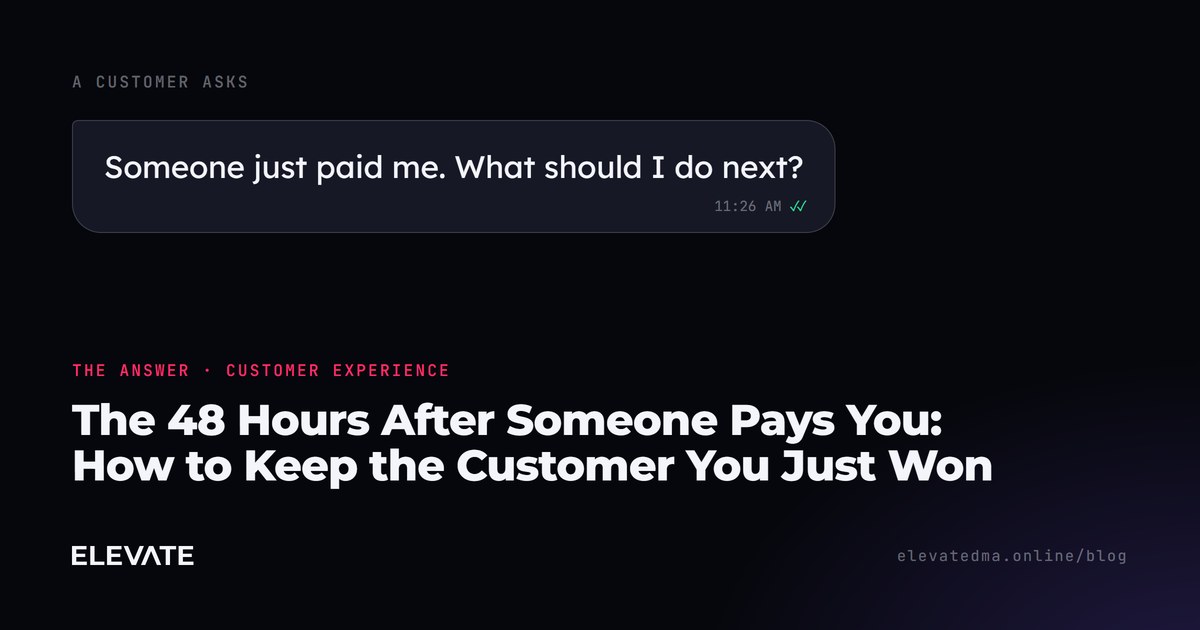
You worked hard for this customer. You answered their questions, sent the quote, followed up twice, and finally the alert came in: payment received. It feels like the finish line.
For the customer, it is the starting line. They have just handed money to a business they don't fully know yet. The next 48 hours decide whether they feel they made a good decision or a mistake. That feeling decides whether they come back, and whether they tell anyone about you.
What the customer is feeling
Right after paying, most customers feel two things at once.
Excitement
They have decided to fix something. The clinic patient is picturing clear skin. The student is picturing the flight. The business owner is picturing the new website bringing in customers. They are paying attention to you now more than they ever will again.
Doubt
At the same time, a quiet voice asks: "Was that a good idea? Will they actually deliver? Did I pay too much?" Many people have paid a business before and then struggled to get a reply. They are watching to see if you will be the same.
Silence feeds the doubt. If nothing happens after they pay, the excitement fades and the doubt grows. By the time you get in touch, they may already be telling themselves they made a mistake.
Why most businesses go quiet
It is rarely because they don't care. It is because the payment feels like the end of the sales work and the start of the real work. The owner turns to delivery, the team gets busy, and the customer hears nothing until the job starts.
From inside the business, everything is moving. From the customer's side, it looks like nothing is happening at all.
What to do in the first hour
Confirm the payment and say thank you. A short, warm message, not a receipt. Use their name. Something like: "Thank you, Ada. We have received your payment and we're looking forward to working with you."
Tell them exactly what happens next. Not "we'll be in touch soon." Give them the next step and when it will happen. "Your first session is Thursday at 10am. We'll send a reminder the evening before."
Tell them who to contact. One name and one number or WhatsApp line. If they have a question, they should never have to wonder who to ask.
What to do in the first day
Send the one thing they need to prepare. A clinic can send what to avoid before a treatment. A consultant can send the short list of documents to gather. A study-abroad agent can send the checklist for the first application. It shows that work has started, and it gives the customer something useful to do with their excitement.
Set honest expectations. Tell them what the next few weeks will look like, including the parts that are slow or uncomfortable. "Most people see a change after the third session, not the first." "The school usually replies in four to six weeks." When the slow part arrives, they remember you warned them, and they trust you more for it.
What to do by the end of the second day
Check in. A short message asking how they are, or whether they have any questions. After a first treatment, "How is your skin feeling?" After a first meeting, "Anything from yesterday you'd like me to explain again?" It takes a minute and it tells the customer they are not just an invoice.
Give them an early win if you can. Something small and real that shows progress: a first draft, a plan on paper, a result from the first session, a booked appointment. The sooner a customer sees something happen, the sooner the doubt goes away.
Should you offer them something else?
This is the time when a customer is most open to the next thing they need. Alex Hormozi, the investor and author, calls it a buying window: right after someone commits to a goal, they want everything that helps them reach it, and they will buy it from whoever mentions it first.
That does not mean pushing. It means telling them about the thing that genuinely helps. A patient starting a skin treatment probably needs the right sunscreen. A business getting a new website probably needs someone to write the first few blog posts. If you have it and don't mention it, they buy it somewhere else. Mention it once, clearly, and let them decide.
What not to do in the first 48 hours
- Don't ask for a referral yet. They haven't seen results. Ask after the first real win, when they have something to tell their friends about.
- Don't ask for a review yet. Same reason.
- Don't send ten messages. Three useful ones are better than a daily reminder that you exist.
- Don't promise what you can't control. Promise what you will do, and when. Leave out what the result will be if you can't guarantee it.
Let the system remember so you don't have to
Doing all this by hand works when you have five customers a month. It falls apart when you have fifty, or when you have a busy week.
The good news is that most of it can happen on its own. The thank-you message, the "what happens next", the preparation checklist, the reminder before the appointment and the check-in two days later can all go out automatically, at the right time, with the customer's name and details in them. Your team only steps in when a customer replies.
You can see what this looks like on our study-abroad demo site. Complete the assessment, then press play on the timeline to watch every message the client would receive, from the day they pay to the day they land.
Start this week
- Write your thank-you and "what happens next" message. Keep it to five lines.
- Pick the one thing every new customer needs to prepare, and write it down.
- Decide what your check-in message says, and when it goes out.
- Send all three to your next paying customer, and notice how they respond.
The point
The payment is not the end of the sale. It is the moment the customer is most excited and most unsure at the same time. What you do in the next 48 hours decides which of those two feelings wins. Get it right and you don't just keep the customer. You give them a story worth telling, and that is where a referral system starts.
If you want a website that follows up with every customer at the right time, price your website in about a minute, or see what each of our services does.